
Kitchen Exhaust Hood Cleaning
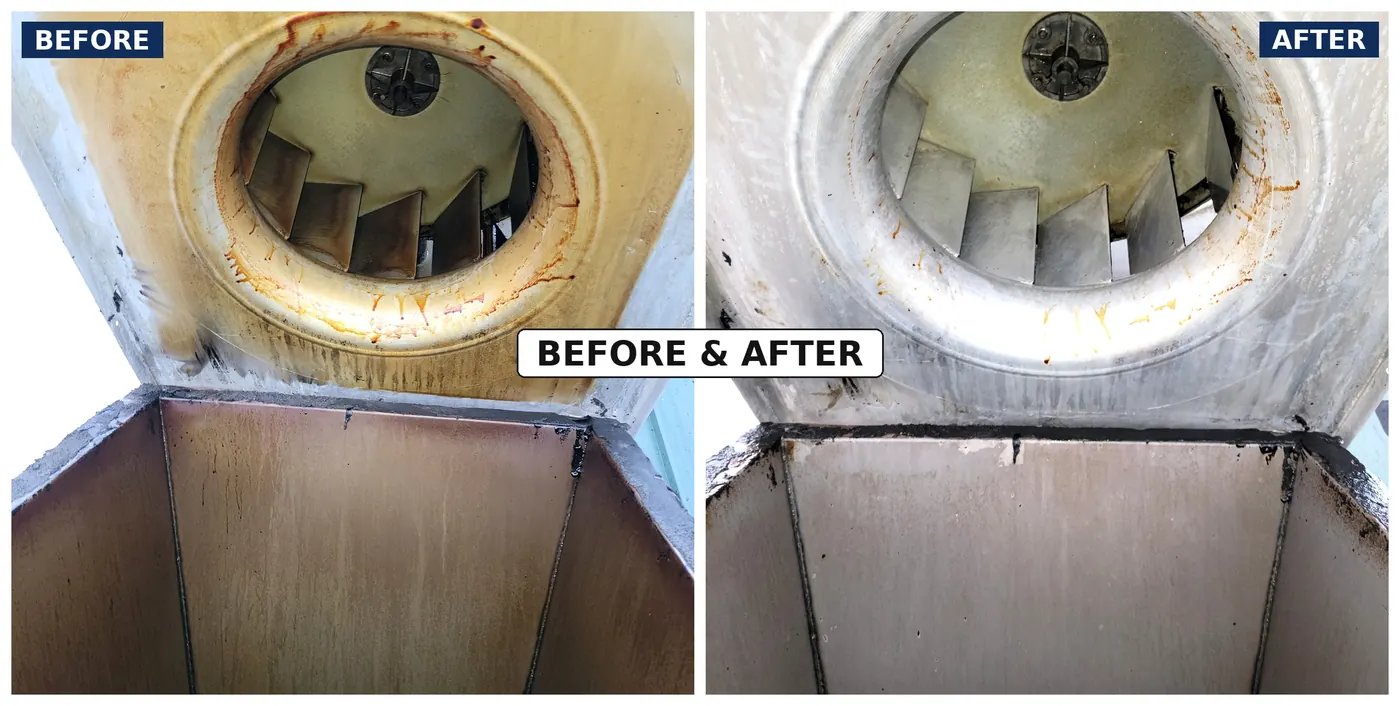
We clean the whole exhaust system to NFPA 96 standards, from the hood over your cookline to the fan on your roof. Every job ends with a dated sticker and before and after photos.
What a hood cleaning covers
- 1Hood (included)
- 2Filters (included)
- 3Plenum (included)
- 4Ducts (included)
- 5Fan (included)
- 6Roof (included)
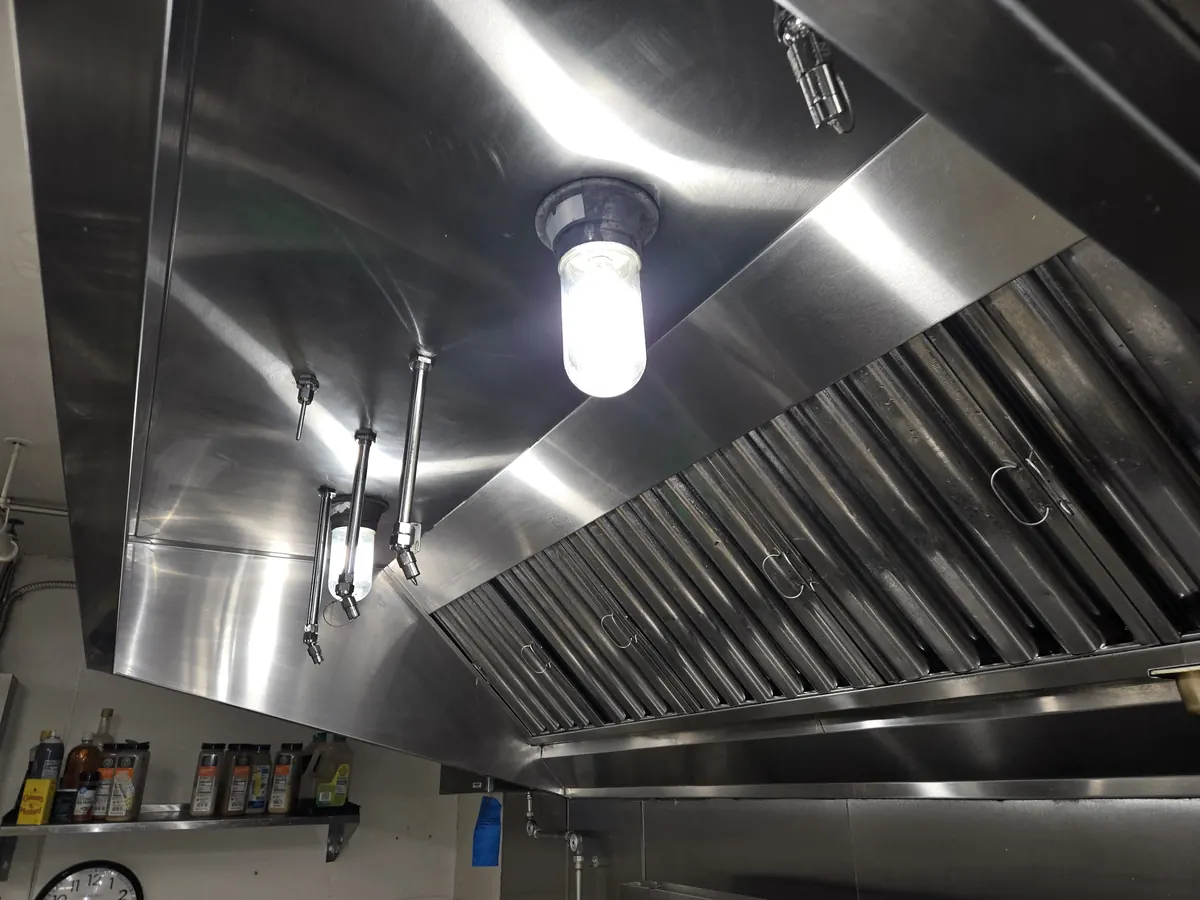
Hood Cleaning at a Glance
Commercial hood cleaning is the removal of built-up grease from a kitchen’s whole exhaust system, so the fire code is met and a flare-up on the line has nothing to spread through.
- What we clean
- Hood canopy, baffle filters, grease trough, plenum, every accessible foot of duct, the rooftop exhaust fan and the grease containment around it.
- How often
- NFPA 96 sets it by cooking volume: monthly for wood or charcoal, quarterly for high volume, every 6 months for most restaurants, yearly for low volume.
- When we work
- Overnight, after close or before opening. We work 24/7, so you don’t lose a service.
- What you get
- A dated service sticker on the hood and before and after photos of the hood, ducts and fan, ready for the fire marshal, health inspector or insurer.
6 Parts, One Cleaning
Grease rides the exhaust air out of the hood, through the filters and up the duct to the fan. Cleaning only the part you can see leaves the worst of it behind, so we clean all 6.
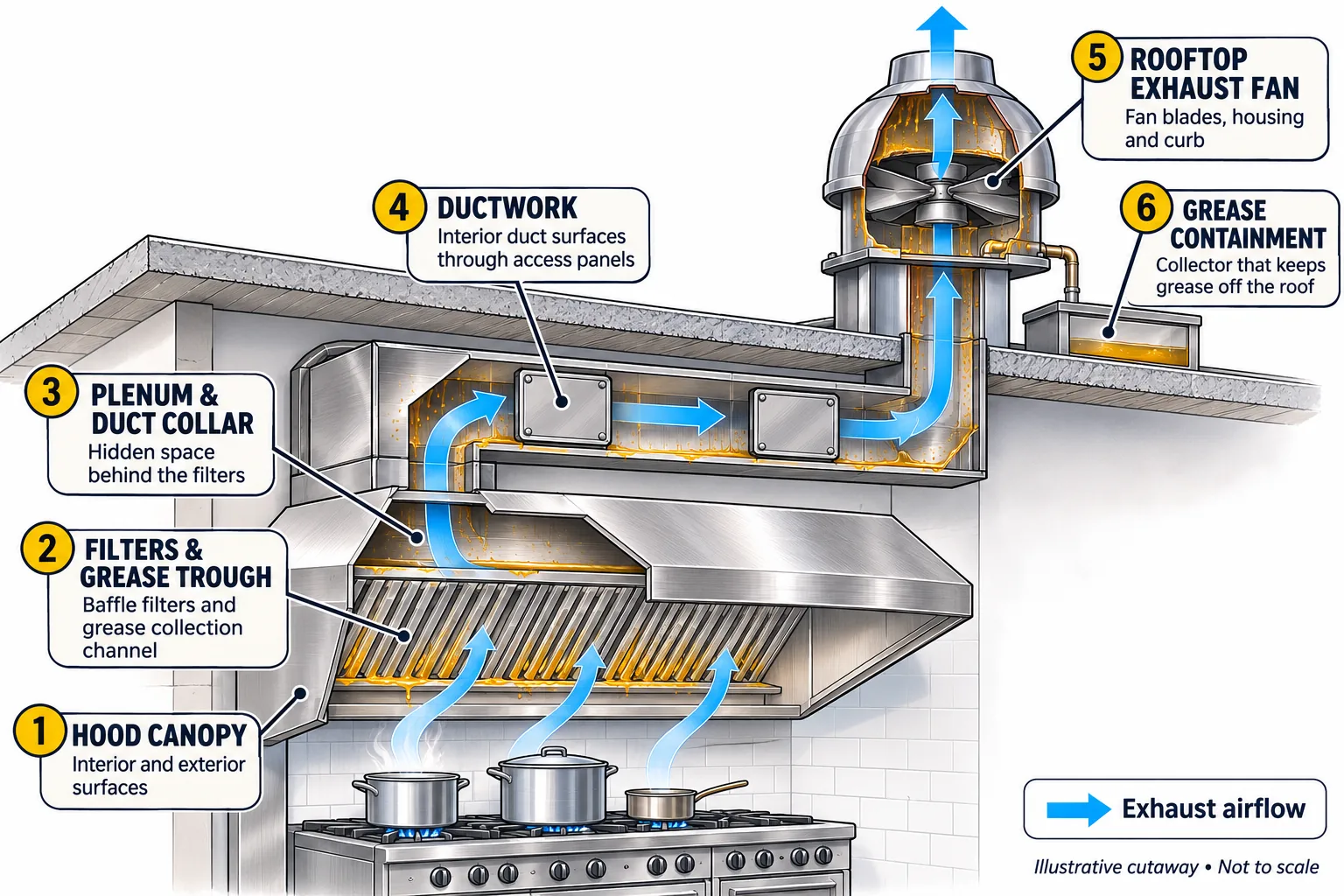
- 1Hood canopyScraped and degreased inside and out, down to bare stainless.
- 2Filters & grease troughBaffle filters degreased and washed, and the trough emptied and cleaned. More on filter cleaning.
- 3Plenum & duct collarThe hidden space behind the filters, where grease builds up fastest.
- 4DuctworkCleaned through the access panels, from the hood all the way to the roof.
- 5Rooftop exhaust fanFan blades, housing and curb degreased and hot-water washed. If the fan or motor is worn out, we replace it.
- 6Grease containmentContainment around the fan catches what the fan throws off, so grease stays off your roof.
How the Night Goes
- We arrive after you close.Or before you open. The cooking equipment should be off and cool, and we need a way onto the roof.
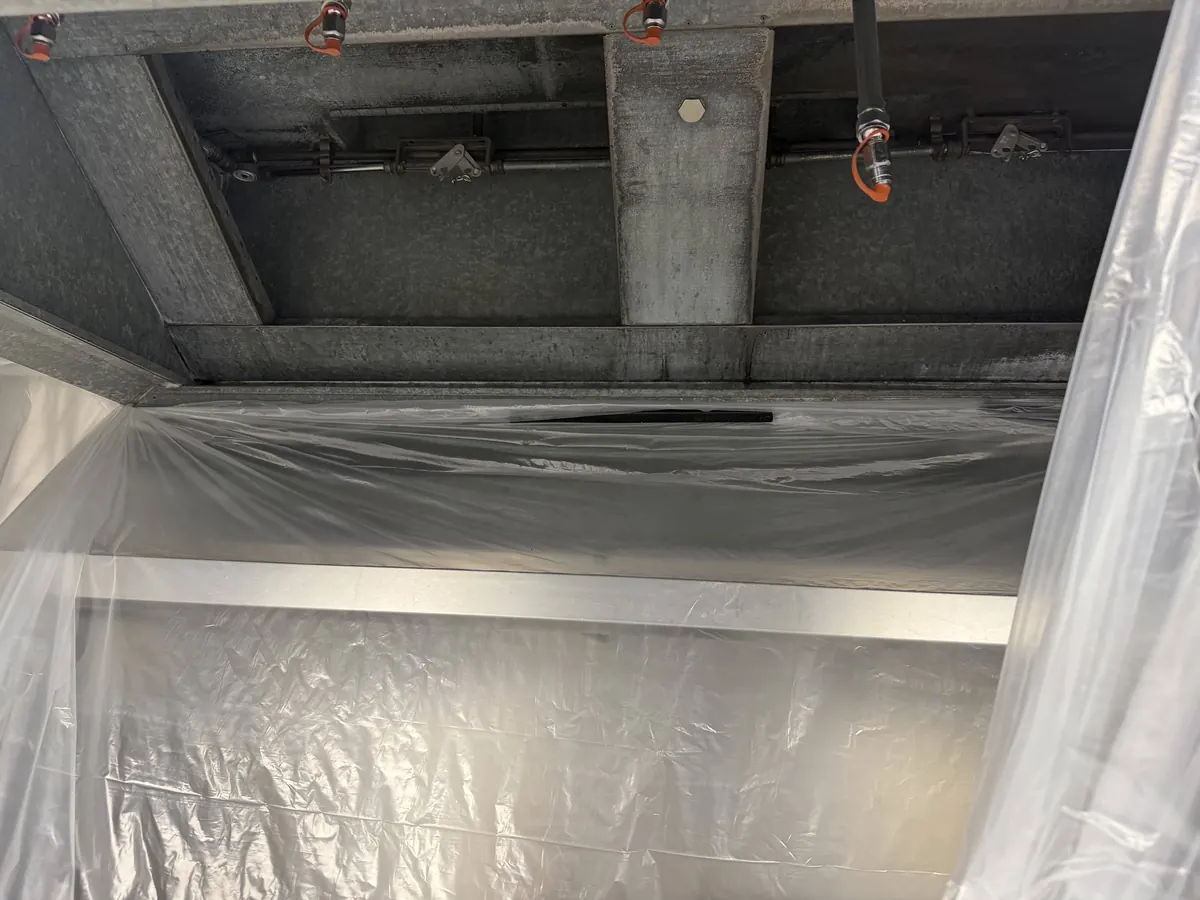
- We protect the kitchen.Equipment gets covered and plastic goes up around the hood to channel water and grease into containment.
- We scrape the heavy grease.Thick buildup comes off by hand first, in the hood, plenum and duct.
- We degrease and hot-water wash.Commercial degreaser goes on the hood, plenum, ducts and fan, then everything is pressure washed with hot water.
- We clean up and document.Plastic comes down, the kitchen is left ready to cook, a dated sticker goes on the hood and you get before and after photos.
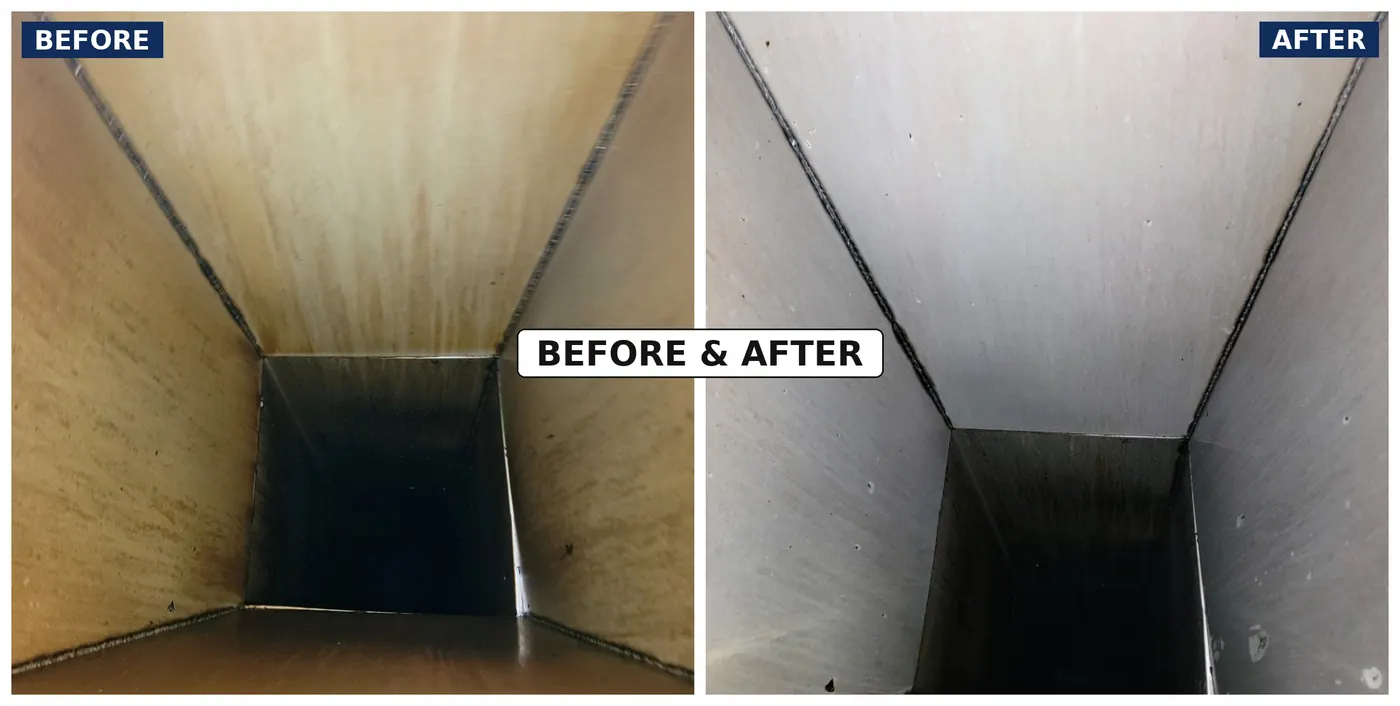
The Grease You Never See
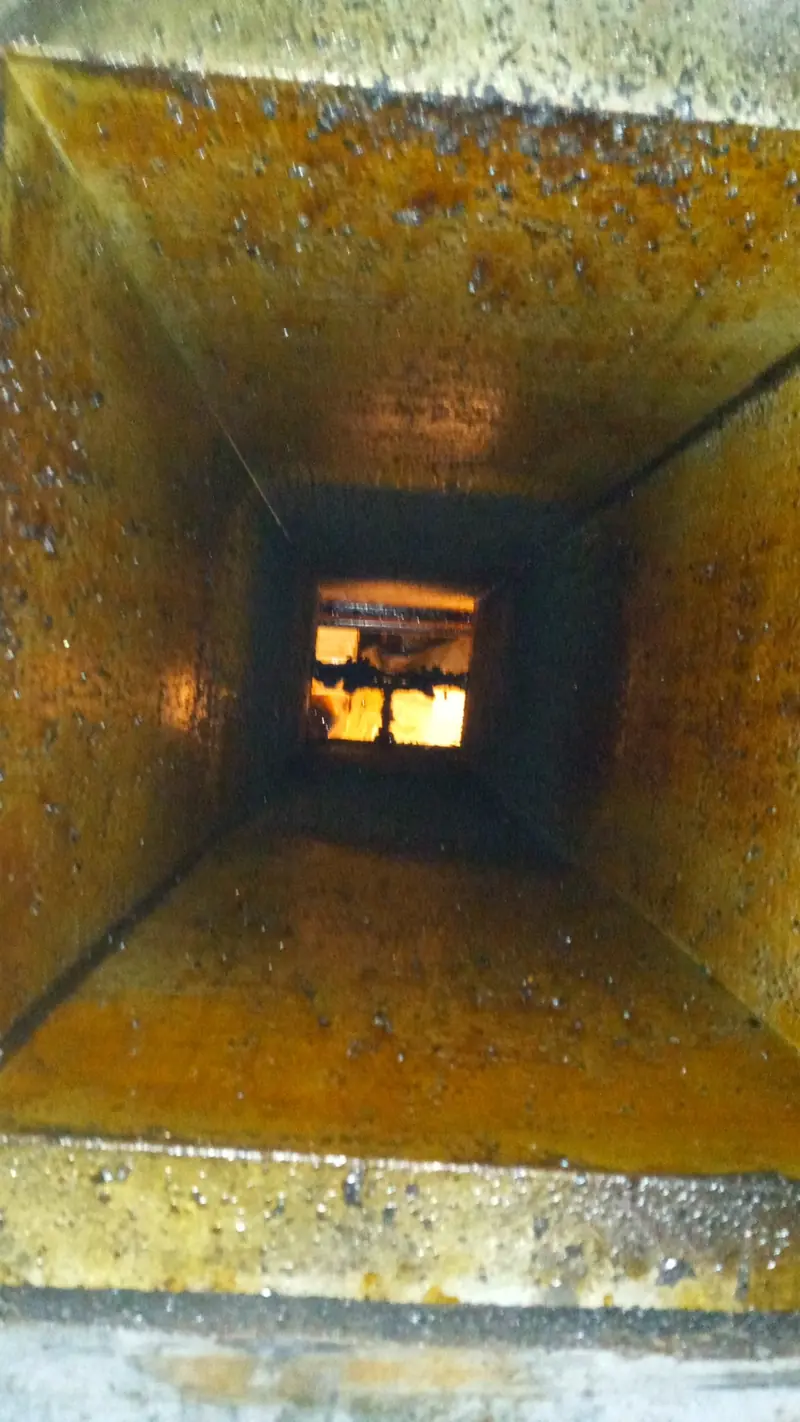
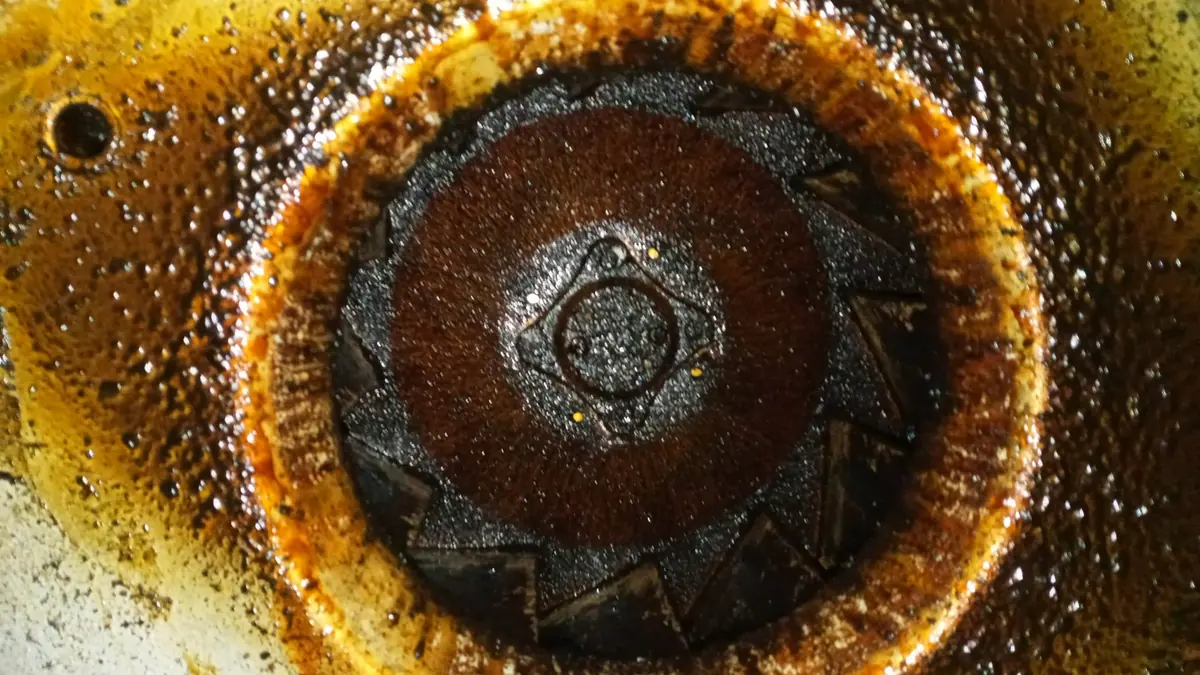
Our own before and after photos from the inside of a duct and a rooftop fan. You get the same kind of photos after your cleaning.
How Often NFPA 96 Says to Clean
Fire departments across Colorado use NFPA 96 to decide how often a commercial kitchen exhaust system must be cleaned. The schedule depends on what you cook and how much. Falling behind can mean a failed inspection, fines, a denied insurance claim or a forced closure.
Not sure where your kitchen falls? Tell us your cooking type when you ask for a quote and we’ll recommend a schedule. Your fire inspector has the final say.
A-1 Hood Cleaning carries general liability, umbrella, commercial auto and workers’ compensation insurance. We send certificates of insurance to you, your landlord or your property manager on request.
| Kitchen type | Clean |
|---|---|
| Solid fuel | Monthly. Wood- or charcoal-burning cooking. |
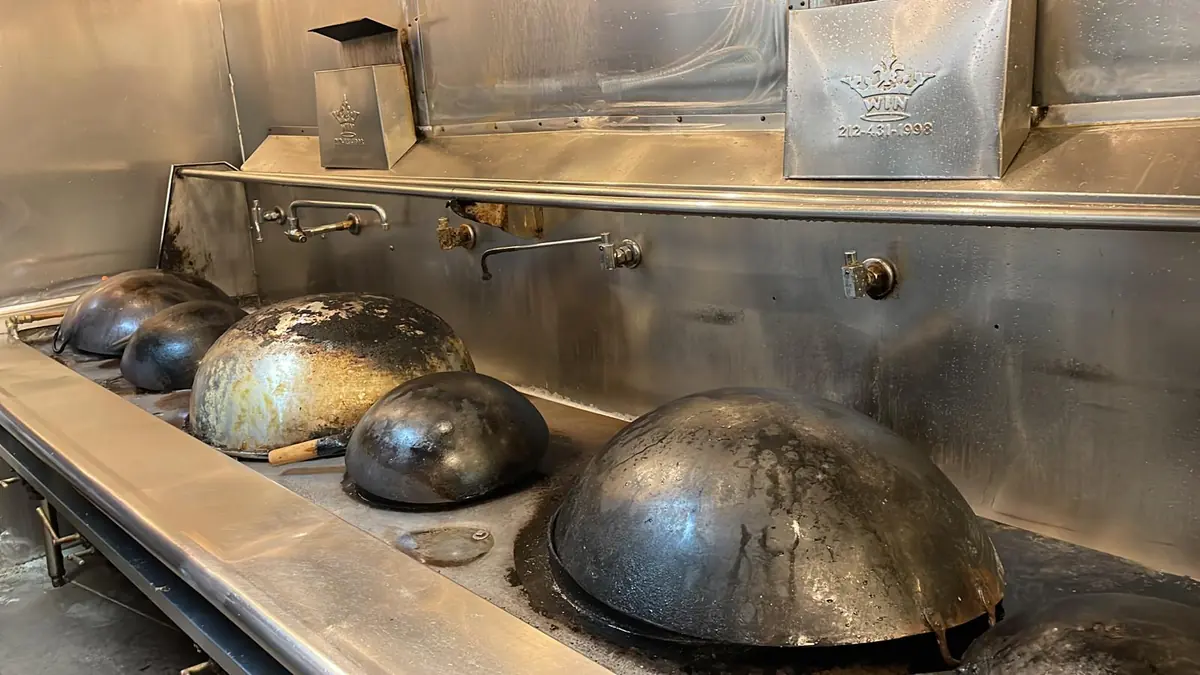
| High volume | Quarterly. 24-hour kitchens, charbroiling, wok cooking. |
| Moderate volume | Every 6 months. Most full-service restaurants. |
| Low volume | Once a year. Churches, day camps, seasonal kitchens. |
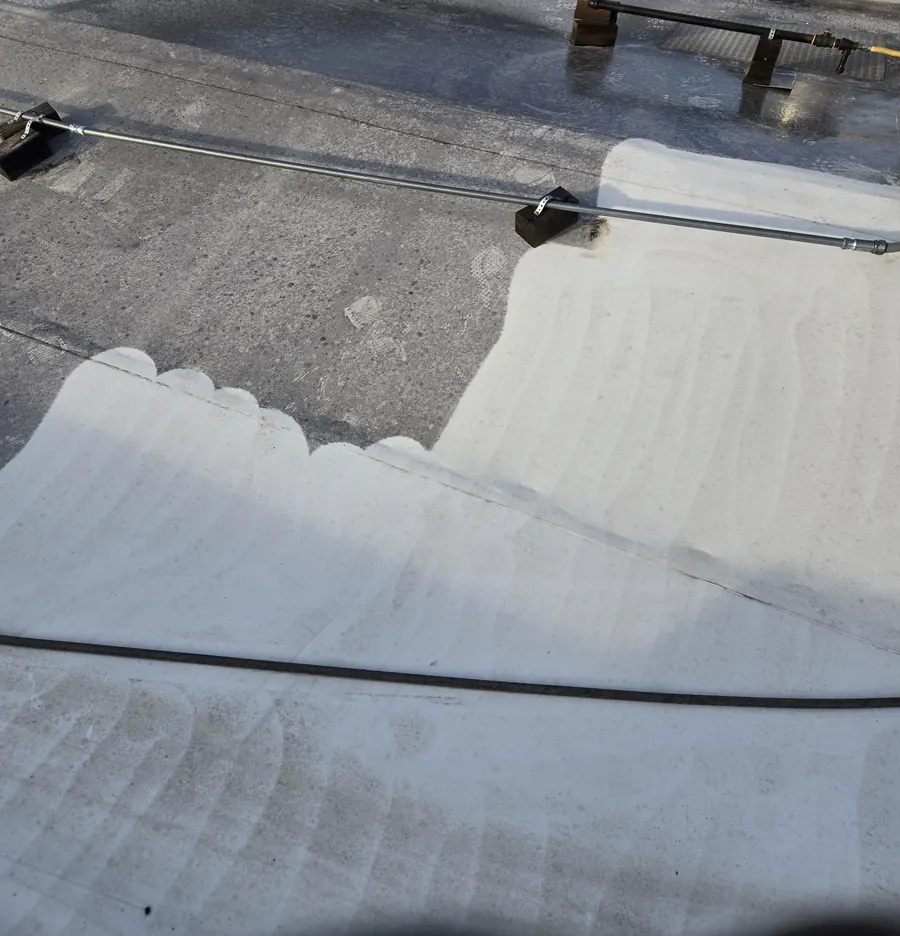
Rooftop Grease Containment
A rooftop exhaust fan throws off grease every day you cook. Without containment, that grease soaks into the roof, breaks down the membrane and becomes fuel for a rooftop fire.
We set up grease containment around your fan and service it at every cleaning, so the grease ends up in the containment and not on your roof.
- Containment around the fan, serviced each visit
- Fan blades, housing and curb cleaned
- Worn fans and motors replaced
Hood Cleaning Questions
Is cleaning just the hood enough?
No. NFPA 96 calls for cleaning the whole exhaust system: hood, filters, plenum, all accessible ductwork and the rooftop fan. Grease that collects in the duct and fan is the hardest to see and the most dangerous to leave, so A-1 cleans all of it on every job.
Do I need to do anything to prepare?
Turn off your cooking equipment and let it cool before we arrive, and make sure we can get onto the roof. We cover your equipment, contain the water and grease, and leave the kitchen ready to cook.
What paperwork do I get after the cleaning?
A dated service sticker on the hood plus before and after photos of the hood, ducts and exhaust fan. That’s the documentation fire inspectors, health inspectors and insurance companies ask for.
How much does hood cleaning cost?
Price depends on the number of hoods, the length of the duct run, how many rooftop fans you have, what you cook and how much grease has built up. Our pricing is competitive and every quote is free. Kitchens on a regular schedule get the most predictable price, because the system never gets badly built up.
Often Booked Together
Schedule Your Hood Cleaning
Free quotes, fast replies, and cleanings scheduled around your hours. Anywhere in Colorado.