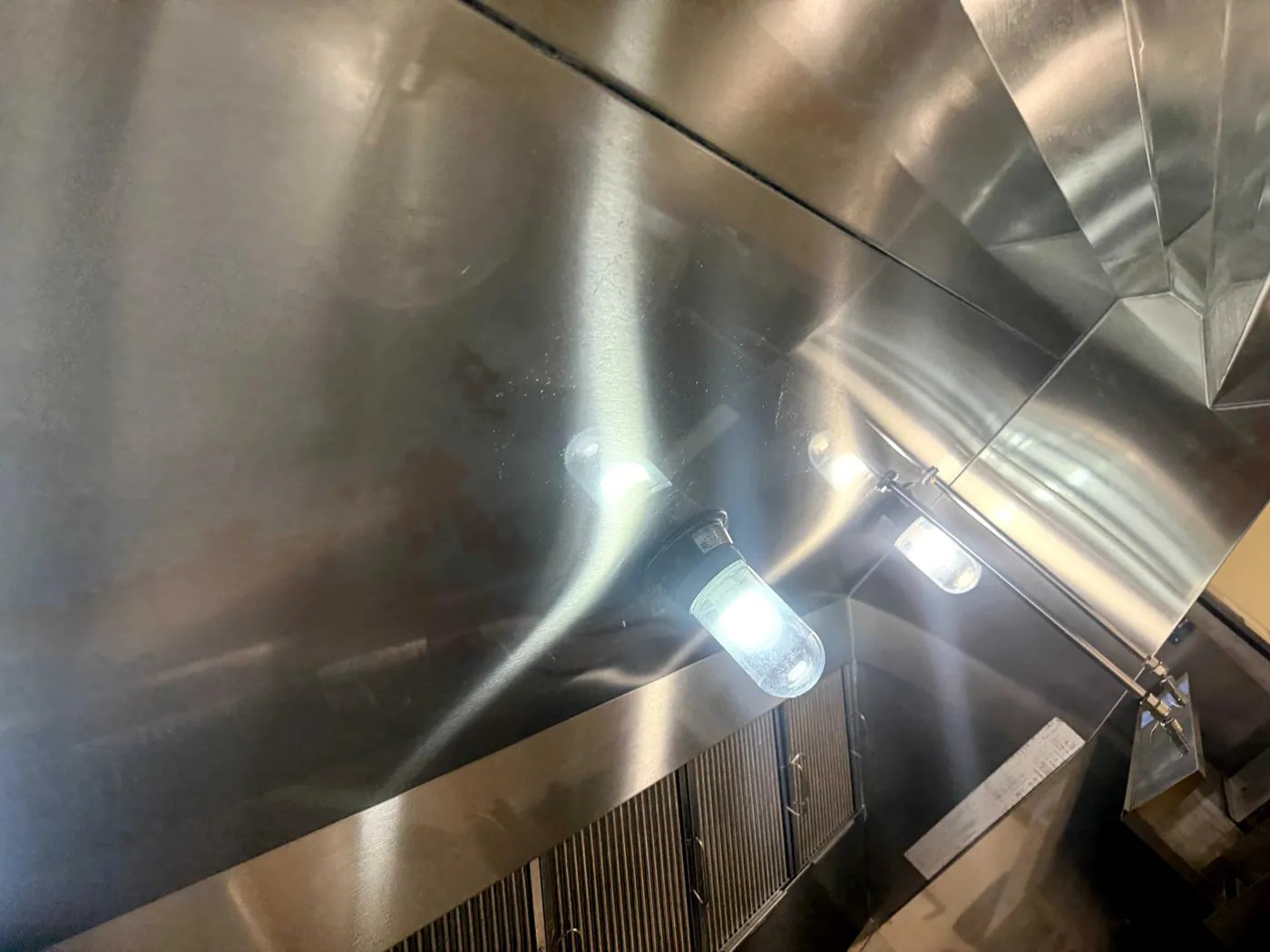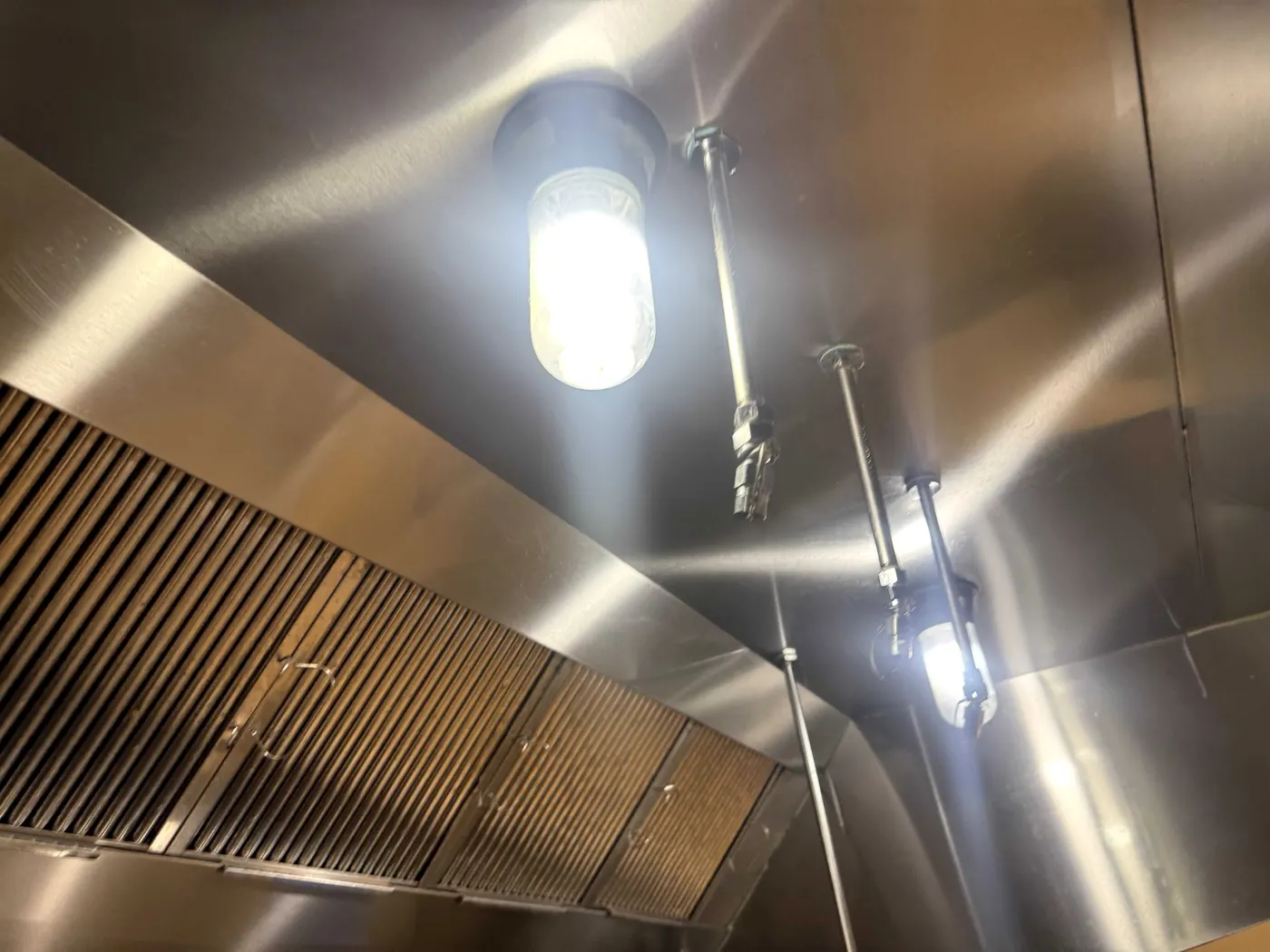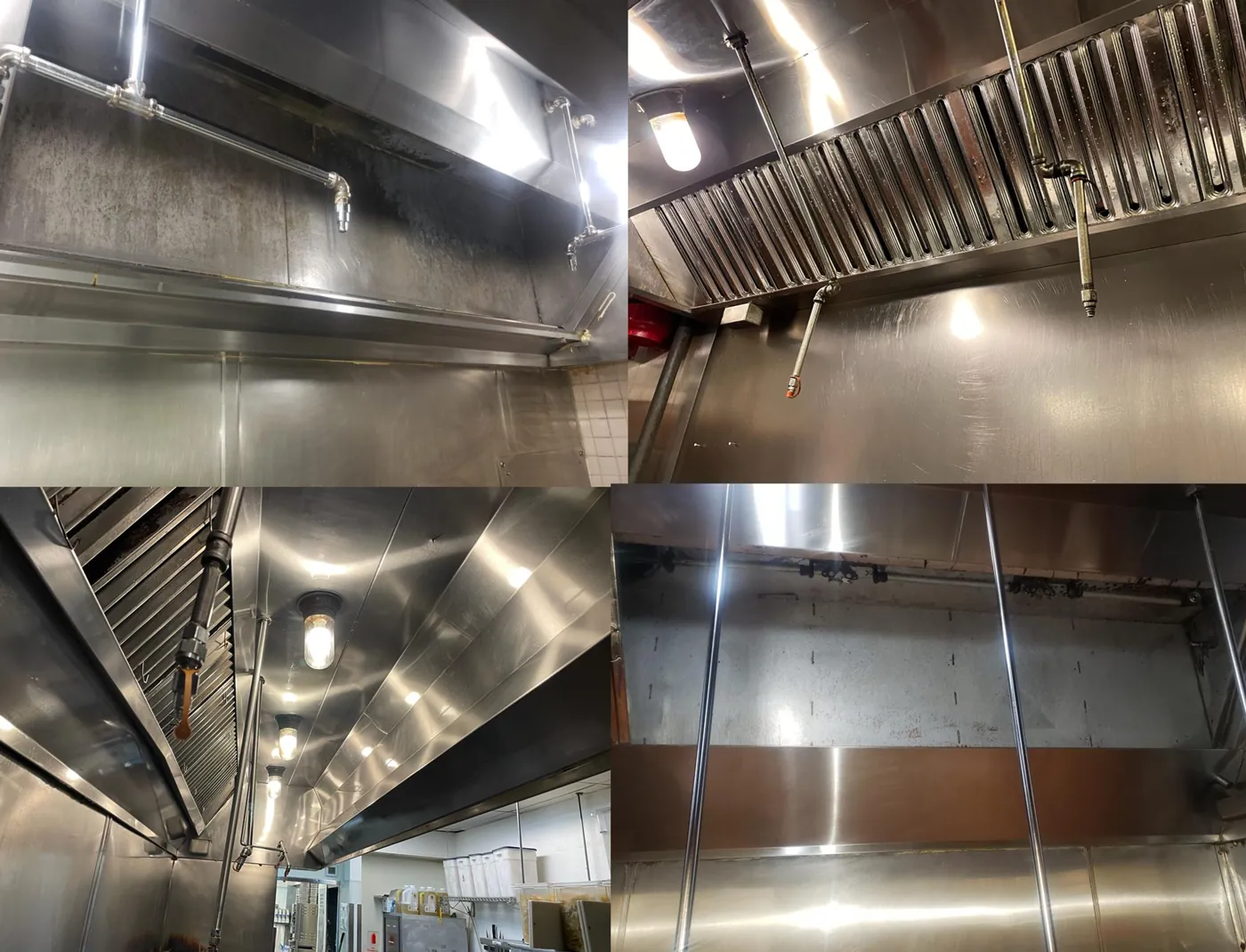
The Short Answer
Turn the cooking equipment off and let it cool, clear the line under the hood, and make sure the crew can get into the building and onto the roof. That covers most of it. The checklist below fills in the rest.
A hood cleaning covers the whole exhaust system: the hood, the filters, the duct and the fan on the roof. The crew needs to reach all four, which is why access matters as much as anything in the kitchen.
The Week Before
- Pick the right night. Choose a night when the kitchen closes on time and nothing is booked early the next morning.
- Sort out the roof. Tell us how the roof is reached: a hatch, a fixed ladder, a locked door or a neighbor’s building. If a key or a landlord’s permission is needed, get it now.
- Sort out the building. Alarm codes, a key or a closing manager who will stay. In an office tower or hotel, tell security and book the dock or freight elevator.
- Tell us what changed. New equipment, a second hood, a fan that has started to squeal or a duct nobody has opened in years.
- Tell your team. The closing crew should know the date so the line is shut down and cleared on time.
The Day of the Cleaning
- Turn the equipment off and let it cool. Fryers, grills, ranges and ovens under the hood should be off and cool before we arrive. You do not need to turn off the pilot lights.
- Clear the line. Move food, pans, utensils and small appliances away from the equipment under the hood and from the shelves beside it.
- Cover or move open food. Anything stored open near the line should be put away in the walk-in or covered.
- Leave us a path. We bring hoses and equipment through the back door. A clear path to the line and to the roof access saves time.
- Leave a parking spot near the back door if you can.
What the Crew Does
Knowing the steps makes it easier to plan around them.
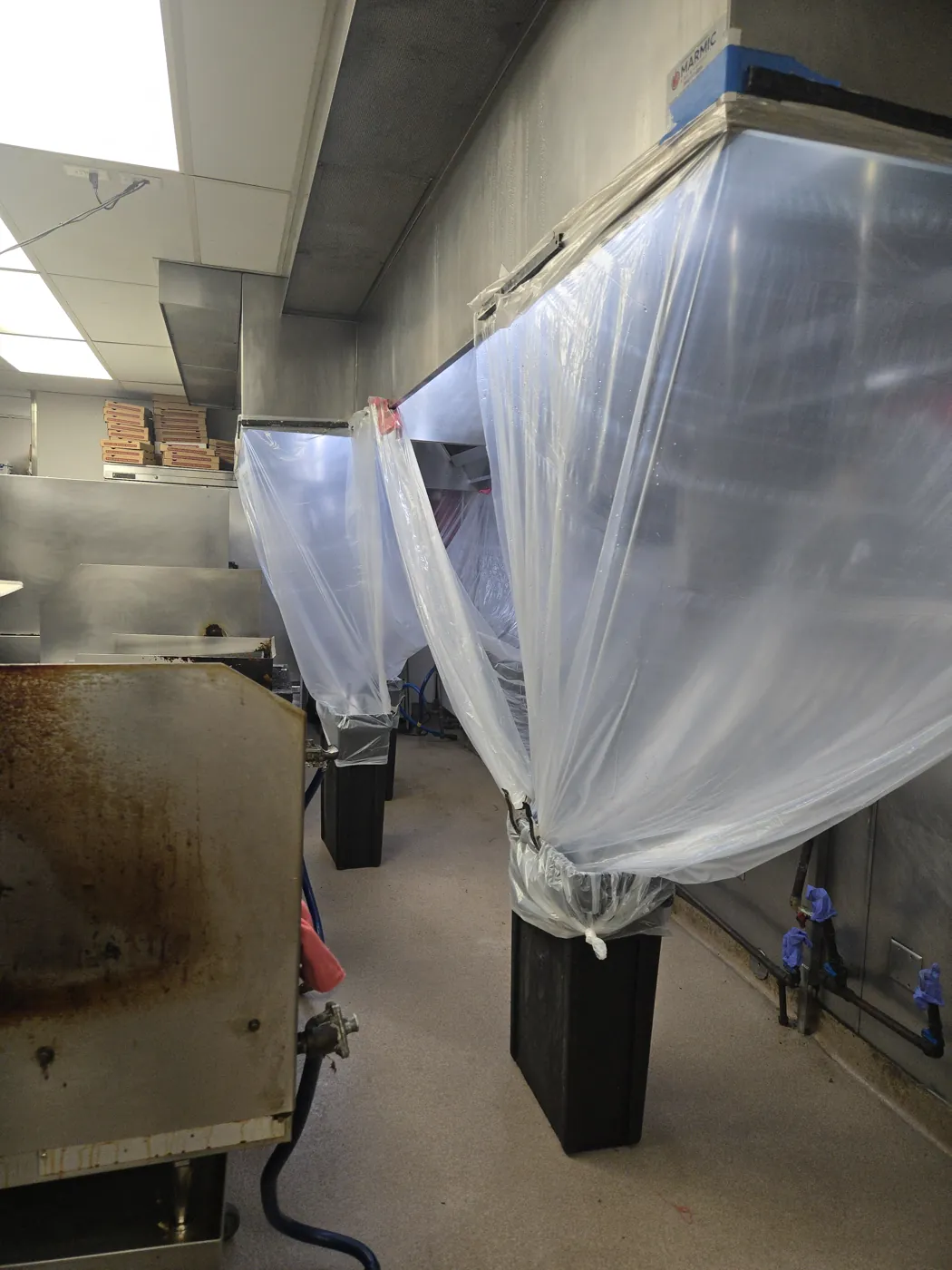
- Cover and wrap. We cover your equipment and hang plastic from the hood so water and grease run into containment.
- Filters out. The baffle filters come out to be degreased and washed.
- Hood, plenum and duct. We scrape and degrease the hood, the plenum behind the filters and the duct, then wash them with hot water.
- The fan on the roof. The fan is opened and the blades, housing and curb are cleaned.
- Put back and wipe down. Filters go back in, the plastic comes down and the area under the hood is left ready to cook.
- Proof. A dated sticker goes on the hood and you get before and after photos.
The Morning After
- Look at the sticker. It should show the date and our name and phone number. An inspector looks for it first.
- Check the filters are in. Grease filters have to be in the hood whenever you cook.
- Turn the fan on before you light the line. Make sure it runs and pulls.
- File the photos. The fire code asks for cleaning records that name the company and the date. Keep the photos and the invoice where a manager can find them.
- Book the next one. See how often a restaurant hood needs cleaning to find your schedule.
Five Things That Slow a Cleaning Down
- Nobody has the roof key.
- The fryers are still hot when the crew arrives.
- The line is full of pans and food.
- The alarm is set and nobody has the code.
- A catering order moved the closing time and nobody told the cleaner.
Each one is fixed with a phone call the day before.
Common Questions
Do we have to close the kitchen for a hood cleaning?
No. We clean after you close and the kitchen is ready to cook when you open. A kitchen that never closes can be cleaned in sections.
Does someone from the restaurant have to stay?
Not always. Many of our clients give us a key, and we let ourselves in and lock up after. A manager can also let us in. Tell us what works for you when you book.
How long does a hood cleaning take?
It depends on the number of hoods, the length of the duct, the number of fans and how much grease has built up. A kitchen on a regular schedule goes much faster than one that has waited years.
Should we clean the filters ourselves before you come?
You do not need to. Filters are washed as part of every cleaning. Between cleanings, washing them often is the best thing your staff can do for the hood.
Sources
- International Fire Code, Commercial Kitchen Hoods: cleaning records, service tags and grease filters in place. Section text published by the Lawrence, Kansas fire department.
- NFPA 96, Standard for Ventilation Control and Fire Protection of Commercial Cooking Operations, Table 12.4 (inspection schedule), as reproduced in the California Mechanical Code, Table 514.3.
- The cleaning steps and preparation advice describe how A-1 Hood Cleaning works on its own jobs.
About the author. Yasser started A-1 Hood Cleaning in 2011. A-1 is family owned and operated, based in Denver, and cleans commercial kitchen exhaust systems across Colorado to NFPA 96 standards. Read our story