The Short Answer
To be ready for 2027, do four things before the year starts: put every hood cleaning for the year on the calendar, find out which fire code your city uses now, learn how your fire department wants reports, and get your records in one place. None of it takes long, and it saves a scramble when an inspector or an insurance company asks.
1. Put the Whole Year on the Calendar
NFPA 96 and the fire code set how often a kitchen exhaust system is inspected for grease by what you cook. Find your row, then book every date for 2027 now.
| What you cook | How often | Cleanings in 2027 |
|---|---|---|
| Wood, charcoal or other solid fuel | Every month | 12 |
| High volume: 24-hour cooking, charbroiling, wok cooking | Every 3 months | 4 |
| Moderate volume: most restaurants | Every 6 months | 2 |
| Low volume: churches, day camps, seasonal businesses | Every 12 months | 1 |
Work back from your busy times. Clean before a holiday rush, not during it. A seasonal kitchen should be cleaned before it opens and after it closes. More detail is in how often a restaurant hood needs cleaning.
2. Check Which Fire Code Your City Uses Now
Colorado cities adopt the International Fire Code on their own timetables, and several along the Front Range have moved to the 2024 edition. The cleaning intervals above did not change, but it is worth knowing which book your inspector carries.
- Denver. The 2025 Denver Building and Fire Codes were adopted in June 2025 and are built on the 2024 International Codes.
- Boulder. The city adopted the 2024 International Codes with local amendments, in effect since August 1, 2025.
- Broomfield. The City and County of Broomfield says the 2024 International Codes, including the fire code, took effect on April 15, 2026.
- Longmont. The city says it has adopted the 2024 International Fire Code.
- Wheat Ridge. West Metro Fire Rescue lists the 2024 International Fire Code for Wheat Ridge and for unincorporated Jefferson County, and the 2021 edition for Lakewood and Edgewater.
- Louisville and Superior. The Louisville Fire Protection District lists the 2024 International Fire Code for both.
- Aurora, Lafayette, Monument, Pueblo West. Each lists the 2021 edition, some with local amendments.
Codes change. If you are remodeling or opening a new kitchen in 2027, ask your fire department which edition applies on the day you apply for the permit.
3. Learn How Your Fire Department Wants Reports
More Colorado fire departments now collect inspection and service reports online instead of on paper. Several use a system called The Compliance Engine.
- Aurora. Aurora Fire Rescue requires service providers to file reports through The Compliance Engine and does not accept them directly. Kitchen hood exhaust cleaning is one of the report types.
- Longmont. The city collects contractor reports through The Compliance Engine and lists commercial kitchen exhaust cleaning among the report types it accepts.
- West Metro Fire Rescue (Lakewood, Wheat Ridge, Edgewater, Morrison). Service providers submit test, inspection and service reports through The Compliance Engine.
- Thornton. The fire department’s commercial cooking form also points to The Compliance Engine for reports.
When you book a cleaning, ask who files the report and how you will get a copy. At A-1 we file the report wherever the city requires it. Everywhere else you get the report to keep, and we keep a copy on file in case you ever need it again. A sticker on the hood is still required either way.
4. Know How Often You Will Be Inspected
Inspection schedules differ a lot from town to town. A few examples from the fire departments themselves:
- Denver. Fire safety inspections of commercial buildings happen once a year.
- Glendale. City ordinance requires an annual inspection of commercial and institutional properties.
- Lafayette. Every business is inspected on an annual or semi-annual basis by the city’s firefighters.
- South Metro Fire Rescue (Centennial, Littleton, Greenwood Village and neighbors). A risk-based cycle: yearly for assembly buildings such as larger restaurants, and every three years for ordinary business occupancies.
- Longmont. Engine companies inspect target businesses on a two year rotation, and high-hazard businesses are inspected yearly.
- Steamboat Springs. A fire code inspection every year for businesses with a liquor license.
What the inspector looks at on the exhaust system is in our fire inspector checklist.
5. Put Your Records in One Place
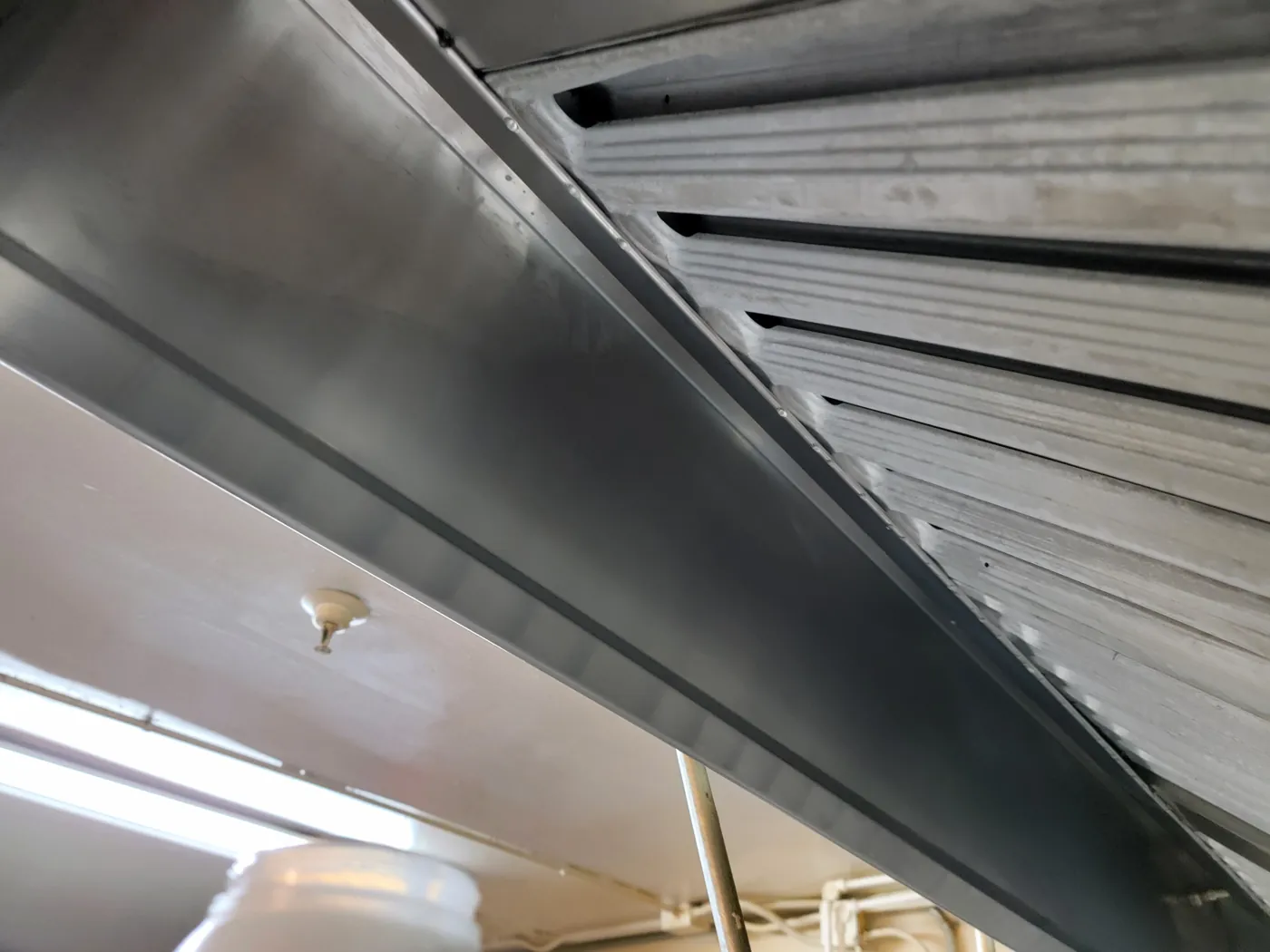
- Hood cleaning. The last two cleaning invoices and the before and after photos. The fire code asks for records that name the company and the date.
- Suppression system. The last service report from your fire protection company.
- Extinguishers. Current tags, including the Class K extinguisher for the cook line.
- Insurance. Your insurer may ask for proof of hood cleaning at renewal. Send the photos before they ask.
- Lease. If your lease makes you responsible for the exhaust system or the roof, keep a copy of that page with the rest.
6. Walk the System Once Before January
- Filters. Bent, burned through or missing filters should be replaced. See hood filter cleaning.
- The fan. Squealing, rattling or smoke that hangs under the hood means the fan needs attention before it fails on a busy night. See exhaust fan replacement.
- The roof. Grease on the roof around the fan means the containment is missing or full. See roof grease cleaning.
- New equipment. A new charbroiler or wok line can move you from the 6 month group to the 3 month group.
Common Questions
Did the hood cleaning rules change for 2027?
The cleaning intervals have not changed: monthly for solid fuel, every 3 months for high volume, every 6 months for most restaurants and yearly for low volume. What has changed in several cities is the code edition and how reports are filed.
How far ahead should I book hood cleaning?
Book the whole year at once if you can. Nights before holidays and school breaks go first.
What if my city is not on these lists?
Call the fire prevention office of your fire department and ask three things: which fire code edition applies, how often you will be inspected and how cleaning reports should be sent.
Sources
- NFPA 96, Table 12.4 (inspection schedule), as reproduced in the California Mechanical Code, Table 514.3.
- International Fire Code, Commercial Kitchen Hoods: records and tags. Section text published by the Lawrence, Kansas fire department.
- City and County of Denver, Building Codes, Policies and Guides, and Denver Fire Department, Fire Safety Inspections.
- City of Boulder, Building Codes and Regulations.
- City and County of Broomfield, Building Code Information.
- City of Longmont, Fire Code Resources (2024 International Fire Code, inspection rotation, The Compliance Engine).
- West Metro Fire Rescue, Adopted Fire Codes and Annual Code Compliance Building Inspections.
- Louisville Fire Protection District, Plan Reviews, Permits and Inspections.
- Aurora Fire Rescue, Inspection Schedule and report submission process.
- City of Lafayette, Community Risk Division and Fire Codes and Policies.
- Monument Fire District, Permits and Codes; Pueblo West Metropolitan District, Fire Prevention Division.
- City of Glendale, Fire Inspections.
- South Metro Fire Rescue, Code Compliance (risk-based inspection cycle).
- City of Steamboat Springs, Fire Prevention FAQ.
- Thornton Fire Department, General Requirements for Commercial Cooking Fire Suppression Systems.

About the author. Yasser started A-1 Hood Cleaning in 2011. A-1 is family owned and operated, based in Denver, and cleans commercial kitchen exhaust systems across Colorado to NFPA 96 standards. Read our story