Who Inspects, and How Often
Your local fire department inspects your kitchen against the fire code your city has adopted. Along the Front Range that code is the International Fire Code with local changes.
- Denver. The Denver Fire Department says its fire safety inspections of commercial buildings happen once a year, and that commercial properties are inspected by their local fire station.
- Aurora. Aurora Fire Rescue says all commercial occupancies get routine fire inspections, on a schedule set by the risk to life safety.
- Boulder. Boulder Fire-Rescue’s Community Risk Reduction division inspects existing buildings against the fire and safety codes.
The inspector does not clean or test your exhaust system. They look for proof that someone qualified did, on time.
The Kitchen Exhaust Checklist
These are the items the fire code spells out for a commercial kitchen hood system. Walk the line and the roof with this list.
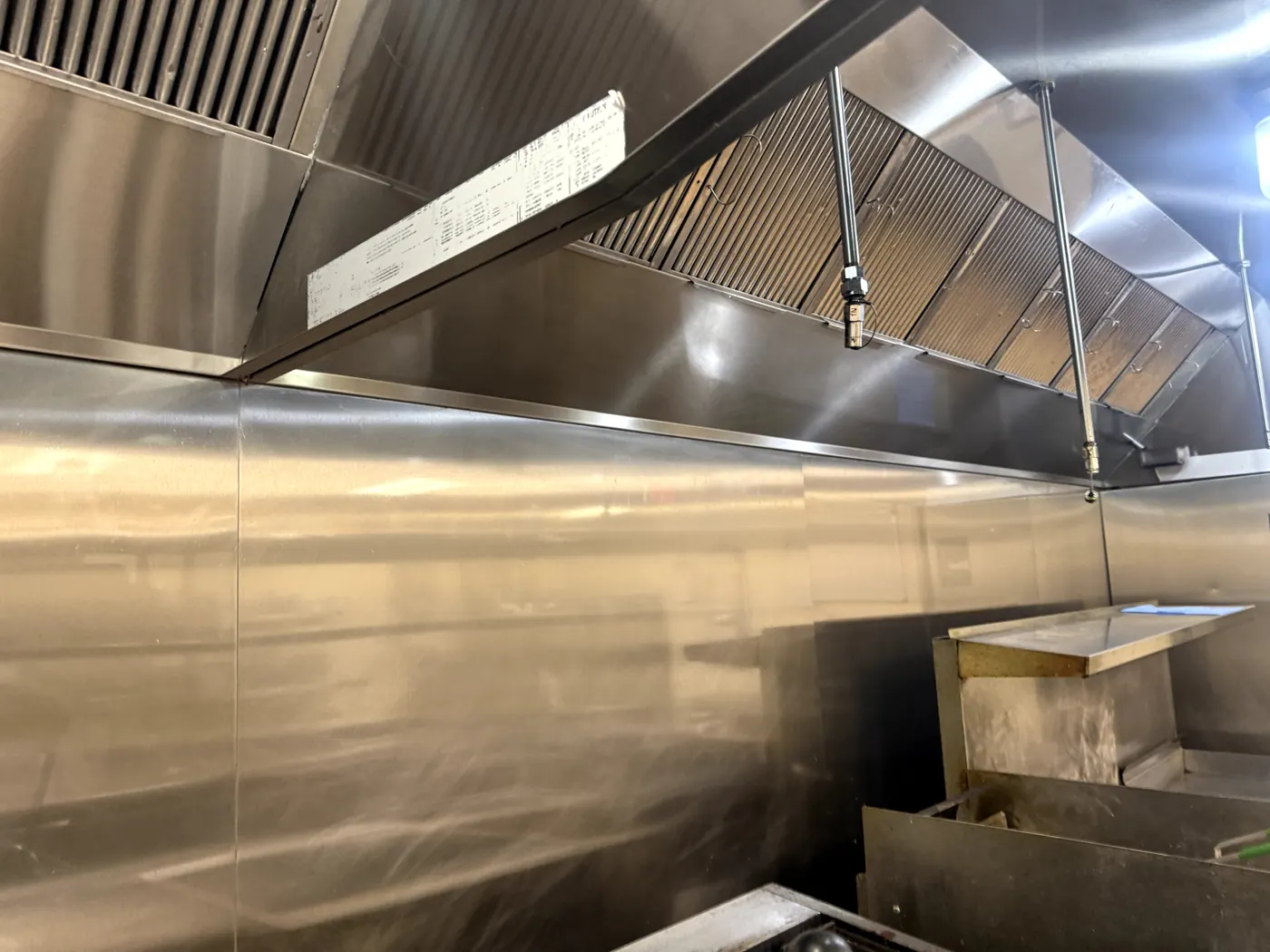
On the hood
- A service tag you can see. The code calls for a tag in a conspicuous place with the service company’s name, address, phone number and the date of service. Old tags should be covered or removed.
- A date that fits your cooking. The inspector compares the tag date with the interval for your type of cooking: 1 month for solid fuel, 3 months for high volume, 6 months for most kitchens, 12 months for low volume.
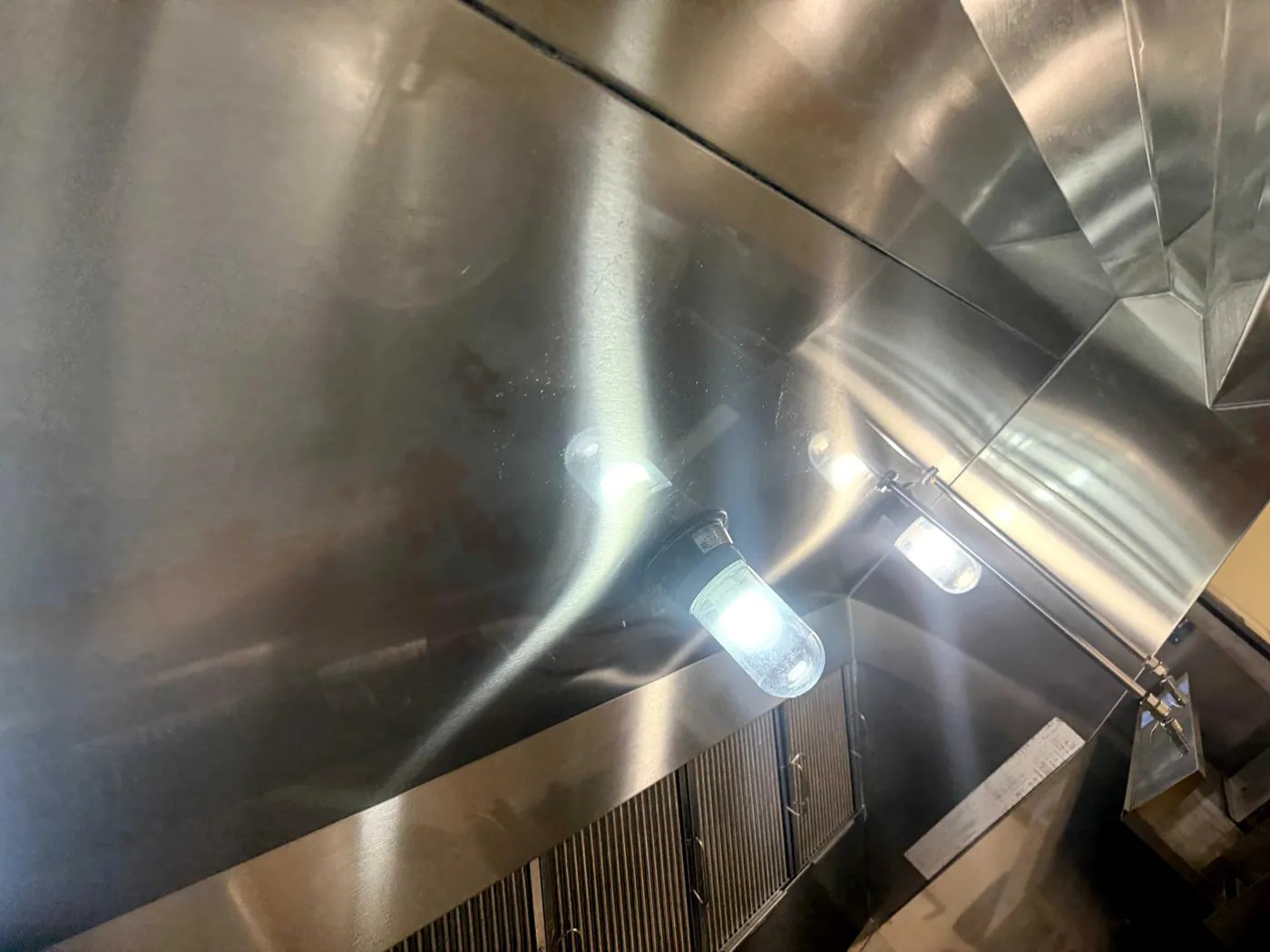
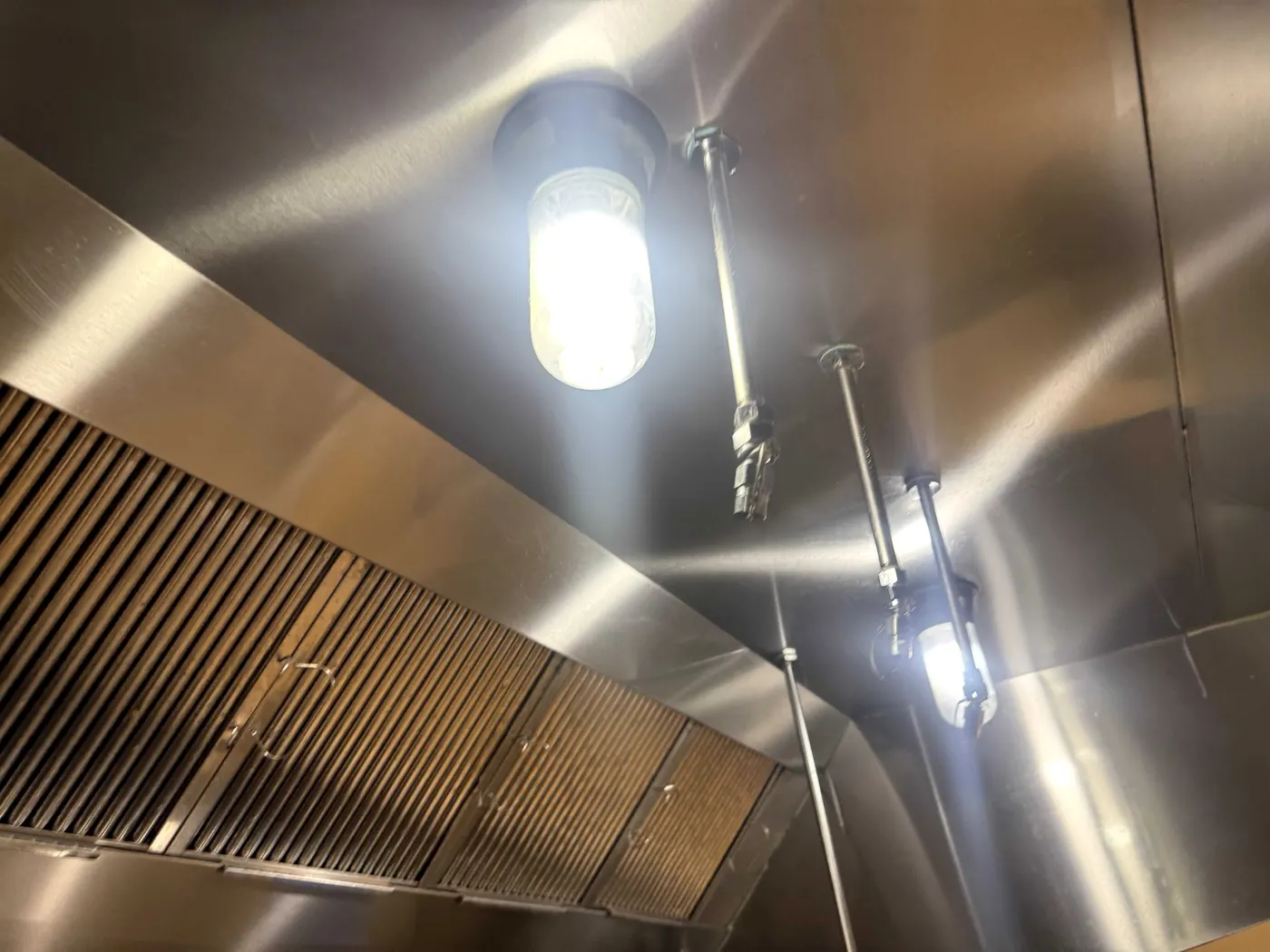
- Grease filters in place. Listed grease filters have to be in the hood any time the equipment under it is in use. A missing or homemade filter is an easy thing to spot.
- No grease buildup. If the hood, filters, fan or ducts show an accumulation of grease, the code says they have to be cleaned.
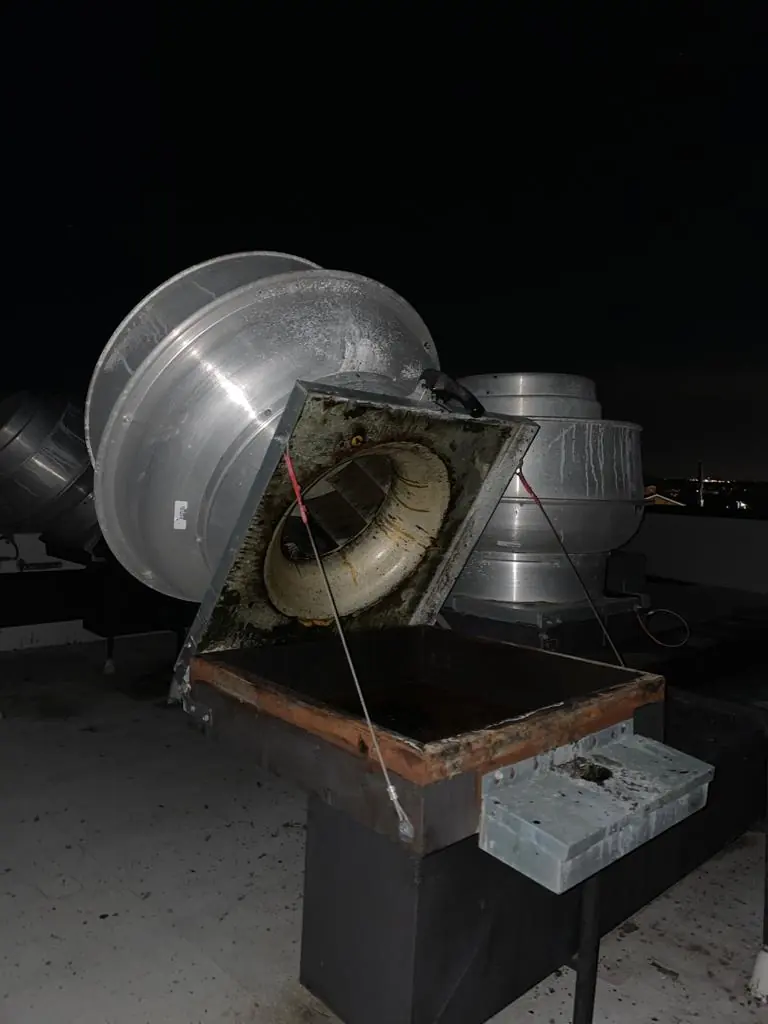
In the duct and on the roof
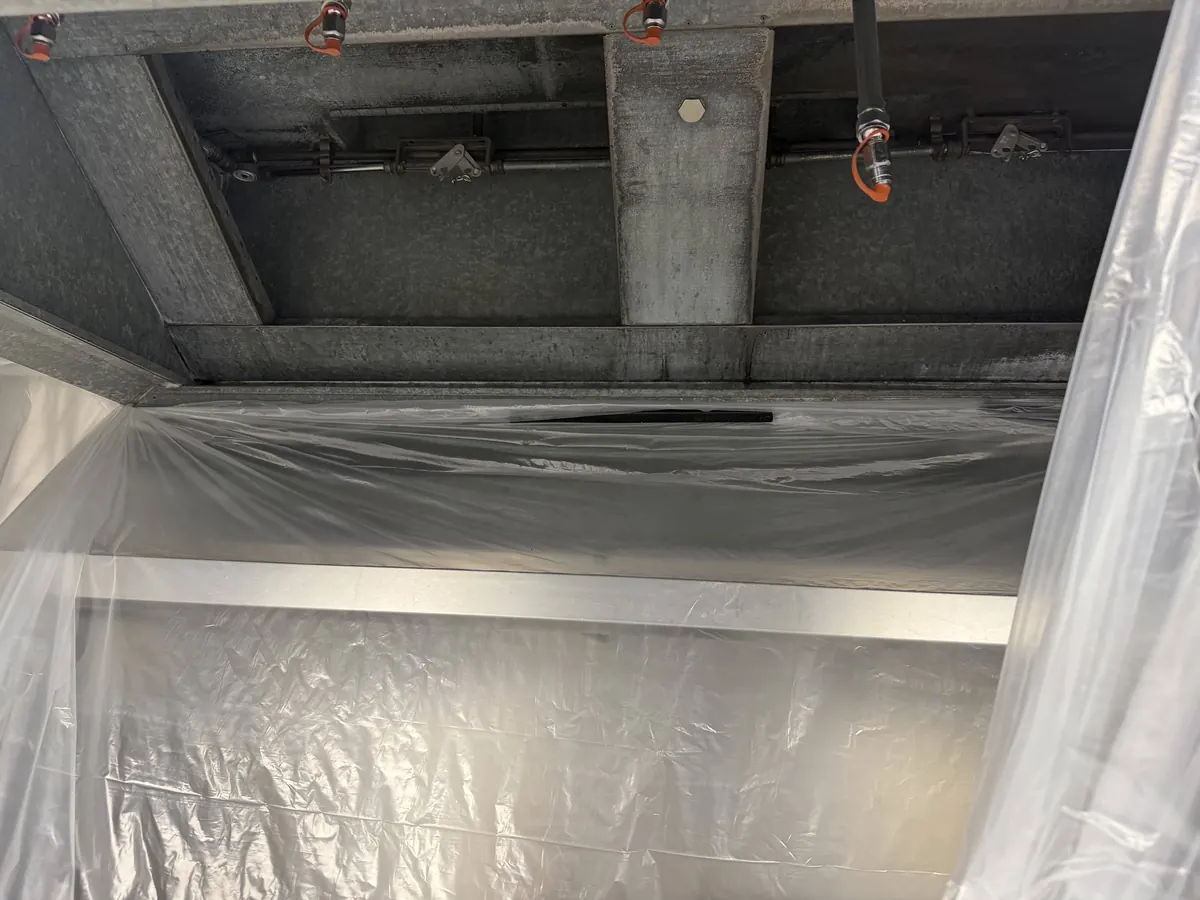
- The whole system, not just the hood. The code names hoods, grease-removal devices, fans and ducts together. A clean canopy under a greasy duct does not pass.
- A fan that runs. The ventilation has to run at its required rate whenever you cook.
In your paperwork
- Cleaning and inspection records. Records have to name the person and the company that did the work and say when it was done. Keep them where a manager can find them.
- Reports filed where your city requires it. Aurora Fire Rescue and the Thornton Fire Department take service reports only through an online system called The Compliance Engine. In Aurora, kitchen hood exhaust cleaning is one of the report types. The service company files it, not you.
The Fire Suppression System and Extinguishers
The nozzles and piping inside your hood belong to the fire suppression system. It is a separate trade from hood cleaning and has its own checks.
- Suppression system serviced every 6 months by a fire protection company, with a current tag.
- A Class K extinguisher near the line. Thornton’s fire department, for example, requires a portable extinguisher within 30 feet of travel from the cooking equipment, and a Class K extinguisher where you cook with oils, fats or solid fuel.
- A pull station you can reach. The manual release has to be easy to get to and not blocked.
- Appliances under their nozzles. If you moved a fryer or swapped the line around, the nozzles may no longer cover it.
What Else They Look At
The inspection covers the whole business, not only the hood. The Denver Fire Department lists these as common violations:
- Fire extinguishers that are out of date, or no log book
- Door locks that take more than a single motion to open
- Storage outside the designated storage areas
- Exit paths narrower than 36 inches, or blocked
- Knox box keys that are missing or out of date
Before Inspection Day
- Read the date on your hood sticker. If it is past your interval, book a cleaning now.
- Put your last cleaning report and photos where the manager on duty can pull them up.
- Check that every filter is in the hood and none are bent or missing.
- Check the tag on the suppression system and the extinguisher.
- Clear the path to the exits and to the pull station.
A-1 leaves a dated service sticker on the hood after every cleaning and sends before and after photos of the hood, ducts and fan. Where the fire department takes reports online, we file the report for you. If you failed an inspection and need the system cleaned fast, call 720-808-3020. We work nights and weekends.
Common Questions
Does the fire inspector clean or test my hood system?
No. The inspector checks that the cleaning and the suppression service were done on schedule by a qualified company, and that the proof is in the building.
What happens if my hood tag is out of date?
That is up to your fire department. Expect a written violation and a date to fix it by. The fastest fix is a full cleaning with a new dated tag and photos.
Is the health inspection the same thing?
No. The health department inspects food safety. The fire department inspects the exhaust system, the suppression system and the building. Both may ask when the hood was last cleaned.
Does A-1 service fire suppression systems?
No. We clean the exhaust system: hood, filters, ducts and rooftop fan. Suppression systems and extinguishers are serviced by a fire protection company.
Sources
- International Fire Code, Commercial Kitchen Hoods: inspection table, cleaning, records, tags and grease filters. Section text published by the Lawrence, Kansas fire department.
- NFPA 96, Standard for Ventilation Control and Fire Protection of Commercial Cooking Operations, Table 12.4 (inspection schedule), as reproduced in the California Mechanical Code, Table 514.3.
- Denver Fire Department, Fire Safety Inspections (yearly inspections, common violations).
- Aurora Fire Rescue, Inspection Schedule (2021 International Fire Code with amendments, routine inspections).
- Aurora Fire Rescue, report submission process (reports filed through The Compliance Engine; kitchen hood exhaust cleaning is a report type).
- City of Boulder, About Boulder Fire-Rescue (Community Risk Reduction division).
- Thornton Fire Department, General Requirements for Commercial Cooking Fire Suppression Systems (Class K extinguisher, pull station, appliance placement, report filing).
- Six month service interval for kitchen fire suppression systems: Charlotte Fire Department, Frequency of Kitchen Hood System Service. Ask your own fire department to confirm the interval it enforces.

About the author. Yasser started A-1 Hood Cleaning in 2011. A-1 is family owned and operated, based in Denver, and cleans commercial kitchen exhaust systems across Colorado to NFPA 96 standards. Read our story